
Behind the Scenes: Improvising Long Form
Books
Mick Napier explores long-form improvisation, including openers, edits, character and sustaining a show from one suggestion.
Books
Mick Napier explores long-form improvisation, including openers, edits, character and sustaining a show from one suggestion.
Books
Will Hines on long-form improv, being present, playing authentically and working with fellow performers.
Books
Keith Johnstone on spontaneity, status, storytelling and the techniques he developed at the Royal Court.
Books
Adam Meggido on listening, responding and building scenes into stories, with games and exercises for narrative improvisation.
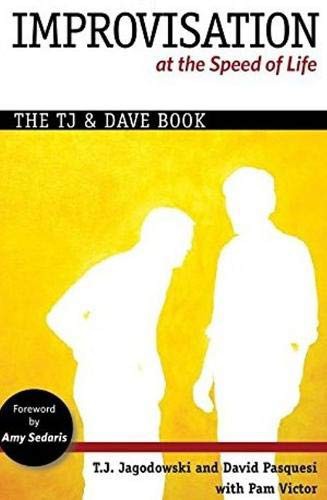
Books
TJ Jagodowski and David Pasquesi, with Pam Victor, share the thinking behind their improvised performances.
Books
Patti Stiles examines how rigid improv rules can limit spontaneity, and encourages a more curious, creative approach to improvisation.
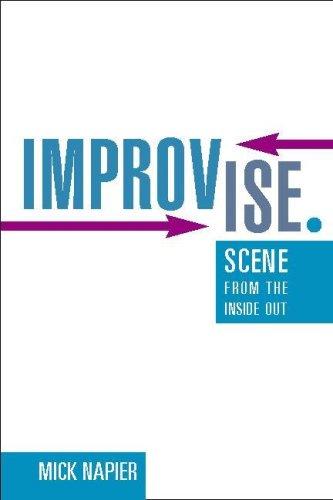
Books
Mick Napier shares his approach to improvising from the inside out. His website links to the book and its follow-up.
Books
Rob Norman offers practical tools for starting scenes, discovering character dynamics, playing patterns and navigating group scenes.
Books
A guide to improv books in English and Spanish, with a rating and description for each title and quarterly round-ups of new ones. It does not sell books itself.
Books
Billy Merritt and Will Hines explore three types of improviser through a fable about finding your strengths and developing your range.
Books
Terry Withers ranks 15 improv books in tiers from Required to Optional, with a note on why each earns its place.
Books
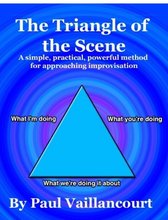
Paul Vaillancourt explores connection with your partner, the location and the game of the scene, with video examples of exercises.
Books
Matt Besser, Ian Roberts and Matt Walsh explain the UCB approach to long-form comedy improvisation, with exercises for scene work and game.
Teaching and syllabus
A community of applied improvisation practitioners, with a global conference, a magazine and article database, and local groups.
Teaching and syllabus
Free one-hour lesson plans written by the Canadian Improv Games coaching committee. They start with offers, listening and advancing, then move on to story, character, genre and location, and can be strung together into longer workshops.
Teaching and syllabus
A progression that runs from an introduction, through game, to the Harold.
Teaching and syllabus
A free set of full curriculum PDFs, from an introduction to long form onwards, plus a guide to best practice for teachers.
Teaching and syllabus
The body that licenses Keith Johnstone's formats, including Theatresports, Gorilla Theatre and Maestro Impro. Members get Johnstone's unpublished writings, instructor and director materials and training programmes.
Teaching and syllabus
Free handouts from Shana Merlin in Austin: an improv cheat sheet, scene work, Improv 101 games, vocabulary, story structures, narrative longform and its formats, and saving a scene that is not working.
Teaching and syllabus
A good worked example of how a level structure can be laid out.
Teaching and syllabus
Free planning worksheets by Andrew Berkowitz covering atomic skills, blockers and exercises. Includes class planning, topic planning and a syllabus template.
Games and exercise databases
Hoopla's collection of exercises for beginners, grouped under warm ups, listening, yes and, being obvious, spontaneity, group mind and scene exercises.
Games and exercise databases
Over 500 entries, also available as a downloadable PDF. Free for non-commercial use.
Games and exercise databases
A filterable game database with a session builder. Freemium, so some of it is free and some is paid.
Games and exercise databases
An open-source database of improv games and lesson plans, from warm-ups to longform formats. Filter by type, group size and topics such as listening, physicality and agreement. Entries are contributed by improv teachers.
Games and exercise databases
Hundreds of games and exercises, categorised by skill, many with video.
Games and exercise databases
An index of 51 improv forms, from the Harold and the Monoscene to True Hollywood Stories and Shakesprov, each with its own entry. Openly licensed.
Games and exercise databases
Calls itself the oldest repository of improv structures on the internet: 321 entries covering warm-ups, exercises, short forms, long forms and show formats, plus random generators for shows and workshops.
Games and exercise databases
A growing catalogue of musical improv games from Heather and Joe of Open Your Mouth and Sing, sorted into warm ups, group and circle games, song formats, exercises and rhyming games.
Newsletters and blogs
Will Hines's newsletter. The essays are free and the Q&As are paid.
Newsletters and blogs
Essays on improv, teaching, notes and the working life of an improviser from the Chicago teacher and host of Improv Nerd, with a fortnightly newsletter.
Newsletters and blogs
An improv blog for teachers, performers and organisers.
Newsletters and blogs
Writing on improv teaching, community building, inclusion, safety in improv spaces and practical technique, from the London-based teacher behind Impromiscuous.
Newsletters and blogs
A website that promotes the UK and International inepov scene. Since 2015 has interviewed over 1000 acts from all over the world including the UK, America, Australia, Singapore to name a few. Also weekly articles called Improv Corner about different areas of improv.
Safety and codes of conduct
UK Theatre and SOLT's ten principles for tackling bullying, harassment and discrimination in theatre workplaces, endorsed by Equity and BECTU. Free to download, with a poster, in English and Welsh.
Safety and codes of conduct
Big Friendly Improv's code of conduct.
Safety and codes of conduct
A collection of emotional safety resources for improv, by David Raitt.
Safety and codes of conduct
Equity asks companies to read a short Safe Spaces statement aloud at the start of a rehearsal period, committing everyone to a space free of fear, bullying and harassment. Links to the Equity helpline.
Safety and codes of conduct
Hoopla's code of conduct for performers.
Safety and codes of conduct
A full discrimination and harassment policy covering performers, teachers, students and visitors across classes, rehearsals and shows. Sets out prohibited conduct, named contacts and how complaints are handled. A good worked example.
Running a company or school
The Fringe Society's starting point for taking a show to Edinburgh: goals, a month by month timeline, and links on to venues, registration, ticketing, budgeting, licensing, insurance and accessibility.
Running a company or school
Hoopla's guide to forming and running a group, from a London perspective: finding people, where to perform, group size, running your own night, commitment, finances and promoting the show.
Running a company or school
An article from American Theatre.
Running a company or school
The Independent Theatre Council's minimum daily and weekly rates negotiated with Equity, BECTU, the Writers' Guild and Unite, with allowances and advice on roles that have no union rate. Readable without membership.
Running a company or school
The Irish performing arts sector body's library of factsheets and toolkits: model performer and venue contracts, tax and employment, music licensing, insurance, company structure, and directories of rehearsal spaces and venues.
Video
Paul Vaillancourt, co-founder of iO West, shares tools, tips and mindset shifts for improvisers starting out or levelling up. Around 350 videos.
Video
A London improv group's channel of unscripted comedy built on audience ideas, with hundreds of full shows.
Tools and apps
A free web app with more than twenty tools for improvisers: an archetype wheel, scene generator, warm-up games, character builder, emotion wheel, scene timer, story spine, Harold guide and suggestion prompts.
Tools and apps
A teaching toolkit for improv instructors: build an exercise library, plan sessions and keep track of what you have taught.
Tools and apps
Find improv shows, workshops, venues and community connections across the UK.